Our Story
What started with one truck and a commitment to reducing waste has grown into Baltimore's most trusted IBC container recycling operation.
Get a Free Quote
Tell us what you need — we respond within 24 hours.
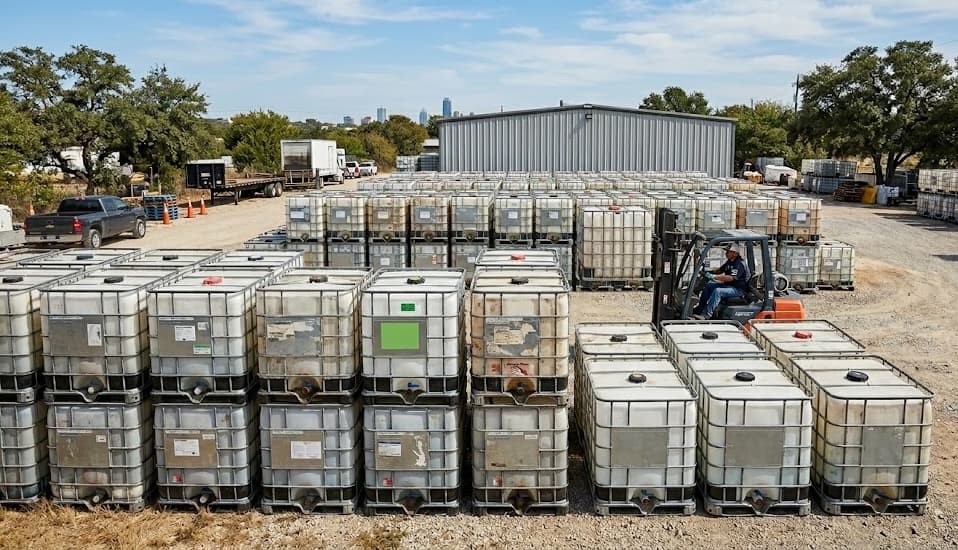
From a small lot to Baltimore's largest IBC recycler
Seven years of growth, one container at a time
In 2018, our founder noticed a persistent problem in Baltimore's industrial landscape. Manufacturers and distributors were paying significant disposal fees to get rid of used IBC totes — containers that, with proper cleaning and inspection, had years of useful life remaining. Meanwhile, small businesses and agricultural operations were paying premium prices for brand-new containers they could not always afford.
The disconnect was obvious: perfectly good containers were being crushed and landfilled while potential buyers went without. Baltimore IBC Recycling was founded to bridge that gap. We started by picking up used totes from food processing plants along the I-95 corridor, cleaning them by hand, and reselling them at a fraction of new-container pricing.
The response was immediate. Within six months, demand outpaced what we could process from a single lot. Businesses appreciated the cost savings, and they especially appreciated knowing their used containers were being reused rather than discarded. The circular economy was not just an abstract concept — it was a practical business model that benefited everyone involved.
A Vision Born on the Factory Floor
Before Baltimore IBC Recycling existed, our founder Marcus Johnson spent over a decade working in industrial waste management across the Mid-Atlantic. Day after day, he watched perfectly functional IBC totes get loaded onto trucks headed for the landfill. Manufacturers considered them a disposal problem. Waste haulers charged premium fees to crush and bury them. Nobody was asking the obvious question: why not clean them and sell them again?
The answer was that nobody had built the infrastructure to do it efficiently at scale in the Baltimore region. The reconditioning process requires specialized equipment, trained labor, regulatory knowledge, and a reliable network of both sellers and buyers. Marcus saw the opportunity not just as a business proposition, but as an environmental imperative. Every IBC that gets a second life is one less that clogs a landfill.
The founding vision was simple but ambitious: create a closed-loop ecosystem where every IBC container in the Mid-Atlantic region flows through a reconditioning cycle rather than a waste stream. That vision has not changed. What has changed is our capacity to execute it — and we are only getting started.
The Three Principles That Guided Our Start
- ◆
Every Container Has Value
Whether a tote can be reconditioned for resale, rebottled with a new inner container, or dismantled for material recycling, there is always a better option than the landfill. We built our operations around extracting maximum value from every unit.
- ◆
Make Sustainability Profitable
Environmental responsibility should not be a cost center. By connecting sellers who need disposal solutions with buyers who need affordable containers, we created a model where doing the right thing is also the economically smart thing.
- ◆
Invest in Baltimore
From day one, we committed to hiring locally, sourcing locally, and contributing to Baltimore's economic vitality. Our growth means local jobs, local partnerships, and a cleaner local environment.
Milestones Along the Way
Every year has brought new challenges, new growth, and a deeper commitment to sustainable IBC container management.
The Beginning
Baltimore IBC Recycling was founded with a single pickup truck and a clear vision: keep reusable IBC containers out of landfills. Operating from a rented lot near the port, our founder began collecting used totes from local food manufacturers and chemical distributors who had no cost-effective disposal option. In the first six months, we processed 247 containers entirely by hand — cleaning, inspecting, and reselling each one individually.
First Dedicated Facility
Growing demand for reconditioned IBC totes led us to lease our first dedicated processing facility — a 12,000-square-foot warehouse in southwest Baltimore. We invested in a professional wash station capable of triple-rinsing containers to food-grade standards and began offering cleaned, pressure-tested totes for resale. This was also the year we hired our first full-time employee beyond the founder.
First 1,000 IBCs Processed
By the end of 2019, we hit a major milestone: 1,000 IBC totes processed and diverted from landfills. This achievement validated the business model and proved that there was substantial demand for affordable, quality-inspected reconditioned containers in the Baltimore market. We celebrated by investing in our first industrial forklift and a second wash bay.
Expanding Through Adversity
When the pandemic disrupted supply chains, demand for affordable intermediate bulk containers surged. Sanitizer manufacturers, cleaning product companies, and food producers all needed containers they could not source through traditional channels. We scaled operations to meet the need, doubling our processing capacity and adding a second transport vehicle to our fleet. By year-end, our team had grown to eight employees.
Buyback Program Launch
We introduced our structured IBC buyback program, giving businesses a financial incentive to return used containers rather than discarding them. The program quickly became our fastest-growing service line, processing over 3,000 totes in its first year. We also secured our first government contract, supplying reconditioned IBC totes to a Maryland state agency for stormwater management operations.
Material Recycling Expansion
Not every IBC can be reconditioned. We partnered with local material recovery facilities to ensure that even end-of-life containers are broken down responsibly — HDPE bottles shredded for pelletizing, steel cages sent to metal recyclers, and pallets repaired or chipped for biomass. This partnership allowed us to achieve a 100% material recovery rate for the first time.
Facility Expansion to 60,000 Sq Ft
To keep pace with demand, we moved into our current 60,000-square-foot facility on Wilso Drive. The new space includes two industrial cleaning bays, four inspection stations, a 20,000-square-foot outdoor storage yard, three loading docks, and dedicated office and training space. This move tripled our daily processing capacity.
Regional Growth & 500th Customer
Our reputation for quality and reliability attracted clients from across Maryland, Virginia, Delaware, and Pennsylvania. We expanded our logistics network to offer scheduled pickups and deliveries throughout the Mid-Atlantic corridor. In August 2023, we welcomed our 500th active customer — a chemical blending company in northern Virginia.
Sustainability Certification & 10,000th IBC
We achieved key environmental benchmarks, including formal recognition of our 100% material recovery rate for all IBC components. Every part of every container we process is either reused or recycled — nothing goes to waste. In March 2024, we processed our 10,000th IBC tote since founding, a moment our entire team celebrated together.
Fleet Expansion & Route Optimization
We added two additional transport vehicles to our fleet, bringing the total to six, and implemented route optimization software to reduce fuel consumption and delivery times by 22%. We also introduced GPS tracking on all deliveries, giving customers real-time visibility into their shipments for the first time.
Community & Innovation
Today, Baltimore IBC Recycling continues to grow. We are investing in automated cleaning systems, expanding our inventory management capabilities, and deepening our partnerships with sustainability-focused businesses across the region. Our youth education program has hosted over 600 students, and our team has grown to 24 dedicated professionals. We surpassed the 15,000 IBC processing milestone in early 2025.
Extending the Life of Every Container
Our mission is to maximize the useful lifespan of every intermediate bulk container in the Mid-Atlantic region. We achieve this through rigorous inspection, professional reconditioning, fair buyback pricing, and responsible end-of-life recycling.
We believe that sustainability and profitability are not at odds — they reinforce each other. When we help a manufacturer sell their used totes instead of paying for disposal, we create value for them, for the buyer who gets affordable containers, and for the environment that avoids unnecessary waste.
Zero-Waste IBC Ecosystem
Our vision is a Mid-Atlantic region where no IBC container ever reaches a landfill. We envision a fully circular ecosystem where used totes flow seamlessly from one business to the next, reconditioned and quality-assured at every step.
By 2030, we aim to process over 25,000 containers annually, partner with 1,000+ businesses, and establish satellite collection points across five states. When a container finally reaches the end of its reuse potential, every component — the HDPE bottle, the steel cage, the pallet, the valve assembly — will be recycled into new products.
This is not idealism. It is a practical roadmap that we are executing year by year, container by container.
Key Milestones That Define Our Journey
From our very first container to our 15,000th, every milestone has reinforced our belief that sustainable IBC management is both good business and good stewardship.
IBCs Processed in Our First 6 Months
Every single one cleaned and inspected by hand from a rented lot near the Baltimore port.
IBCs Milestone Hit in 2019
Validated the business model and triggered our first major facility investment.
Totes Through Buyback Program in Year One
The buyback program became our fastest-growing service within months of launch.
Government Contract Secured in 2021
Supplying reconditioned IBCs to a Maryland state agency for stormwater management.
Sq Ft Facility Opened in 2022
Tripled our daily processing capacity with purpose-built cleaning, inspection, and storage facilities.
Active Customers Across 5 States
Businesses in Maryland, Virginia, Delaware, Pennsylvania, and New Jersey trust us with their IBC needs.
Material Recovery Rate Achieved
Every component of every IBC we process is either reused or recycled — zero landfill waste.
Total IBCs Processed Since Founding
Representing over 2 million pounds of plastic and 1.1 million pounds of steel diverted from landfills.
How IBC Recycling Closes the Loop
Collection
We pick up used IBC containers from businesses, manufacturers, and distributors across the region. Flexible scheduling, fair buyback pricing.
Assessment
Every tote is inspected for structural integrity, valve condition, inner bottle quality, and previous contents. We determine whether it can be reconditioned or should be recycled.
Reconditioning
Containers approved for reuse undergo triple-wash cleaning, pressure testing, valve replacement if needed, and cage repair. They leave our facility ready for their next lifecycle.
Resale or Recycling
Reconditioned totes are sold to businesses needing affordable containers. End-of-life units are disassembled, with each component stream sent to the appropriate recycler.
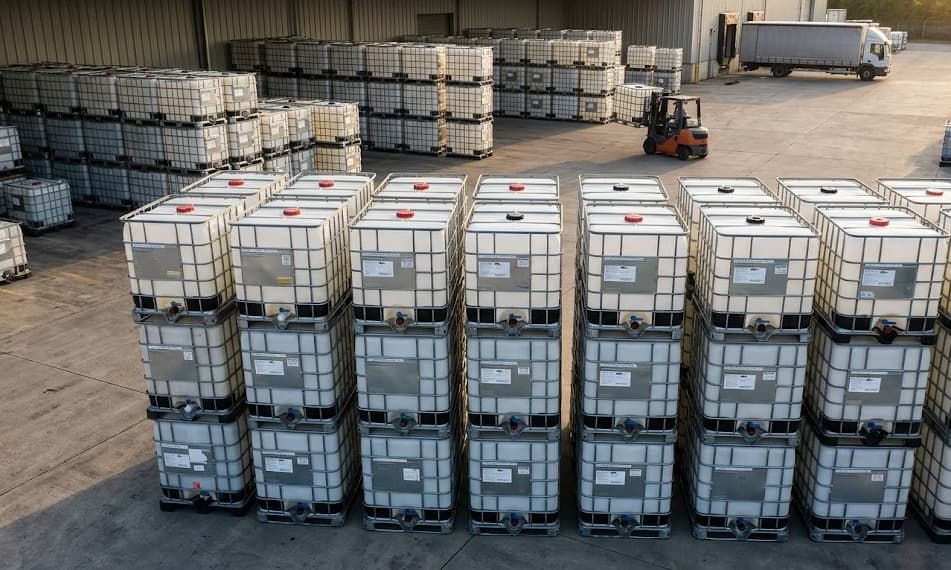
Looking Ahead: 2026 and Beyond
Our story is far from over. The next chapter of Baltimore IBC Recycling is focused on scaling our impact, investing in technology, and expanding our reach to serve more businesses across the eastern seaboard. Here is what we are working toward.
We believe the IBC recycling industry is at an inflection point. As sustainability regulations tighten, supply chains evolve, and businesses increasingly prioritize their environmental footprint, the demand for professional container reconditioning and circular container management will only grow. We intend to be at the forefront of that shift.
Our growth plan is ambitious but grounded in the same principles that got us here: quality, sustainability, fair pricing, and genuine commitment to our customers and community.
Automated Cleaning Systems
We are investing in semi-automated wash and rinse systems that will increase throughput by 40% while reducing water and energy consumption per container. Expected installation in late 2026.
Satellite Collection Points
By 2028, we plan to establish collection drop-off points in Virginia, Delaware, Pennsylvania, and New Jersey, reducing transport emissions and making it easier for businesses across the region to participate in our buyback program.
Digital Inventory & Tracking Platform
We are developing a customer-facing online platform where buyers can browse available inventory in real time, track order status, and access their sustainability impact reports. Beta launch is planned for early 2027.
25,000 Containers Per Year by 2030
Our goal is to nearly double our annual processing volume by 2030. This means more containers saved from landfills, more businesses served, and a larger positive environmental impact across the Mid-Atlantic.
100% Renewable Energy Operations
We are on track to power our entire facility with renewable energy by 2029, through a combination of on-site solar panels and renewable energy credits. Currently at 40% renewable energy.
IBC Reconditioning Training Academy
We plan to launch a formal training program in 2027 to certify IBC reconditioning technicians, creating a new skilled trade pathway and raising quality standards industry-wide.
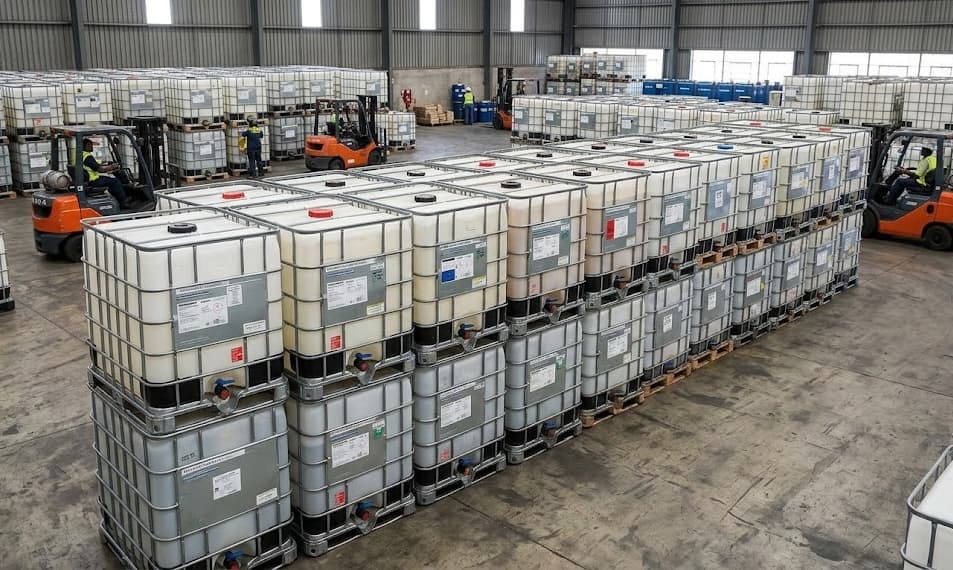
Growing Together
From a two-person operation working out of a rented lot, our team has grown alongside the facility. Every expansion milestone brought new talent, new expertise, and a deeper commitment to our mission of keeping IBC containers out of landfills and in productive use.
Our Team Through the Years
What started as a two-person operation has grown into a dedicated team of 35+ professionals, each bringing unique skills to our mission of keeping IBC containers out of landfills.
The Founders
Marcus and one part-time helper working out of a rented lot. Every container was cleaned, inspected, and loaded by hand. Fourteen-hour days were the norm, and we did everything from sales calls to pressure washing.
First Core Team
The pandemic accelerated our growth and we brought on six dedicated warehouse and logistics team members. We began specializing roles — wash technicians, inspectors, and drivers — creating our first real operational structure.
Scaling Operations
Moving to our 60,000 sq ft facility required doubling our staff. We added a full-time operations director, a compliance officer, dedicated sales staff, and a second shift of warehouse crew to handle growing demand.
Regional Leader
Today our team includes warehouse technicians, CDL drivers, sales representatives, administrative staff, an IT specialist, and a sustainability team. We run two shifts and serve customers across five states.
What Makes Our Team Special
We are not just colleagues — we are a team that genuinely believes in what we do. Many of our team members came to us from other industries and discovered a passion for sustainable operations. Our retention rate is over 90%, which in the warehousing and logistics sector is nearly unheard of.
We invest heavily in training, cross-functional skill development, and creating a workplace culture where everyone's input matters. Our best process improvements have come from team members on the warehouse floor who spotted a better way to do things.
Our Values in Action
Values are only meaningful when they are practiced daily. Here are the six principles that guide every decision we make — and real examples of each one in action.
Environmental Stewardship
We treat every container as a resource, not waste. Our 100% material recovery rate means that even IBCs too damaged to recondition are fully broken down — HDPE bottles become pellets for new products, steel cages go to metal recyclers, and pallets are repaired or chipped for biomass.
In 2024, we invested $45,000 in a closed-loop water recycling system for our wash bays. It recovers 80% of wash water, saving over 300,000 gallons annually and reducing our wastewater discharge by the same amount.
Radical Transparency
We believe our customers deserve complete honesty about what they are buying, what condition it is in, and how it was processed. No surprises, no hidden defects, no misleading descriptions.
Every reconditioned IBC leaves our facility with a detailed condition report documenting its previous contents (when known), cleaning protocol used, pressure test results, and any repairs performed. Customers can request this report at any time.
Fair Dealing
Whether we are buying your used totes or selling you reconditioned ones, our pricing is transparent and consistent. We publish price ranges on our website and never use bait-and-switch tactics.
When scrap steel prices spiked in 2023, we could have lowered our buyback prices to protect our margins. Instead, we passed the higher material value through to our buyback customers, paying 15% more per container than the previous quarter.
Community First
Baltimore is not just where our facility happens to be located — it is our home. We hire locally, source locally, and actively invest in the neighborhoods and organizations around us.
Our partnership with the Community College of Baltimore County has provided 14 paid internships since 2021. Six of those interns accepted full-time positions with us after graduation, building careers in a growing green industry.
Relentless Quality
A reconditioned IBC is only as good as the inspection and cleaning process behind it. We apply a rigorous 12-point inspection protocol to every single container, and any unit that does not meet our standards is routed to material recycling instead of resale.
In Q3 2024, we rejected 340 containers that passed initial visual inspection but failed our pressure test threshold. Rather than lower the bar, we recycled them responsibly. Our customer return rate for quality issues remains below 0.3%.
Continuous Improvement
We are never satisfied with good enough. Our team constantly evaluates our processes, equipment, and customer experience to find ways to do better — faster turnaround, cleaner containers, lower environmental impact.
After analyzing delivery data in late 2024, our logistics coordinator implemented route optimization software that reduced fuel consumption by 22% and cut average delivery times by 35 minutes per route. The improvement paid for the software investment within three months.
Partnerships That Shaped Us
No business grows in isolation. These key partnerships have been instrumental in transforming Baltimore IBC Recycling from a small startup into a regional leader.
Mid-Atlantic Food Processors Association
Our relationship with the MAFPA began in 2019 when a single food manufacturer needed a cost-effective way to dispose of their used 275-gallon totes. Today, we serve over 60 MAFPA member companies, providing scheduled pickups, fair buyback pricing, and compliance documentation. This partnership alone accounts for over 30% of our container intake volume and has given us deep expertise in food-grade IBC reconditioning.
Maryland Department of the Environment
Working closely with the MDE since our founding has ensured that our operations meet or exceed all state environmental regulations. The MDE has been a valuable resource for guidance on wastewater discharge standards, hazardous material handling protocols, and proper documentation for containers that previously held regulated substances. This relationship gives our customers confidence that our processes are fully compliant.
Chesapeake Material Recovery Cooperative
Not every IBC can be reconditioned. Since 2022, we have partnered with the Chesapeake Material Recovery Cooperative to ensure that end-of-life containers are broken down and recycled responsibly. They process our HDPE bottles into recycled pellets, our steel cages into scrap metal, and our damaged pallets into biomass fuel. This partnership is what allows us to claim a genuine 100% material recovery rate.
Baltimore Green Works
Baltimore Green Works has been our primary community engagement partner since 2021. Together, we have co-organized over 20 neighborhood cleanup events, hosted environmental education workshops, and built our youth education program that has reached over 600 students. This partnership keeps us grounded in our community mission and reminds us daily that our work extends beyond the walls of our facility.
Eastern Seaboard Logistics Network
As our customer base expanded beyond Baltimore, we partnered with the Eastern Seaboard Logistics Network to extend our delivery reach. This partnership gives us access to a shared fleet of commercial carriers serving the I-95 corridor from New Jersey to Virginia. It allows us to offer competitive delivery rates to customers across five states without maintaining a massive fleet of our own.
Community College of Baltimore County
CCBC has been our pipeline for emerging talent since 2021. Through a structured internship program, we offer students in logistics, environmental science, and business programs hands-on experience in a growing green industry. The program has produced 14 interns to date, six of whom transitioned to full-time careers with us. We also contribute to CCBC's curriculum advisory board for their environmental technology program.
Lessons We've Learned
Seven-plus years in the IBC recycling industry have taught us things no textbook could. Here are five insights that have shaped how we operate today.
Quality Is Non-Negotiable — Even When It Hurts
Early on, we were tempted to lower our inspection standards to increase throughput. A batch of containers that looked fine visually but failed under pressure testing taught us a painful lesson: one bad tote can cost you a customer for life. Today, we reject approximately 18% of containers at the inspection stage. Our customer return rate for quality issues is below 0.3%, and we would not trade that for any amount of additional volume.
The Circular Economy Only Works When Everyone Benefits
When we first launched our buyback program, we tried to negotiate the lowest possible prices for used containers. It did not work. Sellers stopped calling. We learned that a circular economy requires fair value at every stage — the manufacturer selling their used totes, the recycler reconditioning them, and the end buyer purchasing them. When everyone wins, the loop keeps spinning. When someone feels shortchanged, it breaks down.
Invest in Your Team Before Your Equipment
Our most productive year was not when we bought our best equipment — it was when we invested in a comprehensive training program for our warehouse crew. A well-trained technician using basic tools will outperform an untrained operator with top-of-the-line equipment every time. Today, we spend over 40 hours per employee per year on training, and the ROI is reflected in our throughput, quality, and safety record.
Relationships Beat Transactions
The customers who have been with us the longest are not the ones who got the lowest price on day one. They are the ones we built a genuine relationship with — learning their business, anticipating their needs, and being honest when something went wrong. Over 60% of our revenue now comes from recurring customers on scheduled programs. Long-term relationships are the foundation of a sustainable business in every sense of the word.
Sustainability Has to Be Practical to Scale
Idealism alone does not divert containers from landfills. We learned early that our environmental mission had to be backed by a practical business model that works for every participant. Sellers need fair buyback prices. Buyers need affordable containers. We need sustainable margins. When the economics align with the environmental goals, sustainability scales itself. When they do not, even the best intentions stay small.
Our Impact on Baltimore
Baltimore IBC Recycling is more than a business — we are a local employer, an environmental steward, and an active contributor to the economic vitality of our city.
Jobs Created
35+Full-time positions created in the Baltimore area since 2018. Over 92% of our workforce lives in the greater Baltimore metropolitan area. We offer competitive wages starting above the Baltimore living wage, comprehensive health benefits, paid time off, and a 401(k) matching program. Many of our positions require no prior experience — we train in-house, creating accessible career pathways in a growing green industry.
Waste Diverted from Local Landfills
2M+ lbsOver two million pounds of plastic and 1.1 million pounds of steel have been diverted from Baltimore-area landfills through our operations. Each IBC tote we recondition for reuse keeps approximately 130 pounds of HDPE plastic and 75 pounds of steel out of the waste stream. Our 100% material recovery rate means that even containers too damaged for reuse are fully broken down and recycled, with zero material going to landfill.
Local Businesses Supported
500+We serve over 500 active business customers, the majority of them based in Maryland. Our affordable reconditioned containers help small manufacturers, farms, chemical blenders, and food processors access the bulk storage they need at 40-60% below new-container pricing. We also support local vendors by sourcing cleaning supplies, PPE, truck maintenance, and office supplies from Baltimore-area businesses whenever possible.
In the Media
Our work in IBC recycling and sustainable container management has been recognized by local and industry media outlets.
How One Baltimore Startup Is Turning Industrial Waste Into a Circular Economy
Feature profile on Baltimore IBC Recycling's growth from a one-truck operation to a 60,000 sq ft facility, including interviews with founder Marcus Johnson on the business model behind IBC reconditioning.
Top 20 Green Businesses in Maryland for 2024
Baltimore IBC Recycling was named to the Maryland Sustainability Report's annual list of the state's most impactful green businesses, recognized for our 100% material recovery rate and community education programs.
The Growing Market for Reconditioned Intermediate Bulk Containers
Industry article featuring Baltimore IBC Recycling as a case study for how regional IBC recyclers are filling a critical gap in the packaging supply chain and offering sustainable alternatives to new container purchasing.
Baltimore Company Diverts Millions of Pounds of Plastic from Landfills
News coverage of our 10,000th IBC processing milestone, highlighting the cumulative environmental impact of our operations and our partnership with Baltimore Green Works on community cleanup initiatives.
Local Recycler Opens New 60,000 Sq Ft Facility in Southwest Baltimore
Television segment covering the grand opening of our expanded facility on Wilso Drive, including footage of our reconditioning process and interviews with team members about the company's growth and hiring plans.
Closing the Loop: How IBC Recycling Companies Are Advancing the Circular Economy
Op-ed co-authored by our Head of Sustainability David Chen on the role of regional IBC recyclers in reducing industrial waste and how the reconditioning model can be replicated across other packaging types.
For press inquiries, interview requests, or media access to our facility, please contact media@baltimoreibcrecycling.com
Photo Gallery
A visual tour of our facility, our team, and the work we do every day to give IBC containers a second life.
Facility Overview
Aerial and ground-level views of our 60,000 square foot facility on Wilso Drive. The facility includes two industrial cleaning bays, four inspection stations, a 20,000 sq ft outdoor storage yard with capacity for 2,000 containers, three loading docks, and dedicated office and training space.
Wash Bay Operations
Our industrial-grade cleaning bays in action. High-pressure wash systems heat water to 180 degrees Fahrenheit and use food-safe cleaning agents to triple-rinse containers to food-grade standards. Our closed-loop water recycling system is visible in the background, recovering 80% of wash water for reuse.
Inspection & Quality Control
Trained technicians performing our 12-point inspection protocol. Each station is equipped with pressure testing equipment, valve testing rigs, and digital documentation tools. Technicians evaluate cage integrity, inner bottle condition, valve function, and structural soundness before any container is approved for resale.
Inventory Yard
Rows of cleaned and reconditioned IBC totes organized by grade, capacity, and previous-contents category in our outdoor storage yard. Containers are staged for easy retrieval and efficient order picking. The yard accommodates up to 2,000 totes at any given time.
Our Team at Work
Candid shots of our 35+ team members during daily operations — forklift operators moving containers between stations, wash technicians cleaning totes, inspectors documenting condition reports, and our logistics team coordinating pickups and deliveries across the Mid-Atlantic.
Community Events & Education
Photos from our youth education program visits, neighborhood cleanup events with Baltimore Green Works, our booth at the Baltimore Farmers Market, and community college internship ceremonies. These images capture the community side of our business that goes beyond container processing.
Want to see our facility in person? We offer tours for prospective customers, partners, and educational groups. Schedule a visit
Be Part of Our Story
Whether you are looking to buy affordable reconditioned IBC totes, sell your used containers, or partner with us on a sustainability initiative, we would love to hear from you.