IBC Buying Guide
Everything you need to know before purchasing an IBC tote — whether you are buying one or one hundred.
Get a Free Quote
Tell us what you need — we respond within 24 hours.
Before You Buy: What Every Buyer Should Know
Intermediate Bulk Containers are a significant investment for any operation. A well-chosen tote will deliver years of reliable service, while a poorly chosen one can leak, contaminate product, or fail an inspection. This guide walks you through every factor to consider so you make the right purchase the first time.
We will cover the three condition tiers (new, reconditioned, and used), what to physically inspect before buying, common red flags that signal a bad deal, a realistic cost comparison, and a printable checklist you can take to any seller.
New vs Reconditioned vs Used
Brand-New IBC Totes
- + Full manufacturer warranty (typically 5 years)
- + Guaranteed food-grade or UN certification
- + Complete traceability and batch documentation
- + No risk of cross-contamination
- + Maximum service life remaining
- - Highest cost ($250 - $450 for 275 gal HDPE)
- - Lead times of 2-6 weeks for large orders
Best for: Food/beverage, pharmaceutical, first-time hazmat use, regulatory-sensitive applications.
Reconditioned IBC Totes
- + Professionally pressure-washed and sanitized
- + New gaskets, valves, and caps replaced
- + Cage inspected and straightened
- + Rebottled options available (new bottle, used cage)
- + 40-60% less than new ($100 - $200 for 275 gal)
- + Eco-friendly — keeps totes out of the landfill
- - May have minor cosmetic marks on cage
- - Not suitable for first-use food-grade without rebottling
Best for: Most industrial applications, non-food chemicals, water storage, cleaning solutions, automotive fluids.
Used IBC Totes
- + Lowest price ($50 - $120 for 275 gal)
- + Immediately available in large quantities
- + Great for non-critical applications
- + Perfect for DIY projects and rainwater harvesting
- - Previous contents may be unknown
- - Valves and gaskets may be worn
- - Cosmetic damage (dents, stains, faded labels)
- - No warranty; sold as-is
Best for: Rainwater, irrigation, waste collection, non-potable water, DIY projects, emergency storage.
What to Inspect Before Buying
Whether buying in person or requesting photos from a supplier, check every item on this list.
1. The Bottle (Inner Container)
- Check for cracks, especially around the valve fitting and top fill area
- Look for discoloration — yellowing or browning suggests UV damage or chemical staining
- Inspect for warping or bulging, which indicates heat exposure
- Smell the interior — strong odors mean the previous product has been absorbed
- Verify the manufacture date molded into the bottle (HDPE expires after 5 years from date of manufacture for UN-rated use)
2. The Cage (Steel Frame)
- Check for bent or broken weld points — especially at the top corners and bottom rails
- Look for rust — surface rust is cosmetic, but deep pitting weakens structural integrity
- Ensure the cage sits flush on the pallet without rocking
- Verify the data plate is present and legible (UN rating, SG, volume, manufacturer)
- Make sure the top frame locks into the stacking position securely
3. The Valve and Cap
- Open and close the valve several times — it should move smoothly without excessive force
- Check the gasket for cracking, swelling, or deformation
- Look for drips around the valve body when water is added
- Verify the valve type matches your hose or dispensing setup
- Ensure the dust cap is present and seals properly
4. The Pallet
- Check for broken boards or cracked plastic (wood pallets)
- Ensure forklift entry points are not blocked or damaged
- Verify the pallet is securely attached to the cage frame
- Check for ISPM-15 stamp if you need to export internationally
- Confirm the pallet type matches your warehouse requirements (food-grade often requires plastic)
5. Labels and Documentation
- Confirm the UN/DOT marking is present and matches the advertised specification
- Check the specific gravity (SG) rating — must be equal to or higher than your product's SG
- Request documentation of previous contents (SDS) if buying reconditioned
- Verify the tote has not exceeded its DOT re-use date (5 years from manufacture for HDPE)
- Ensure old hazmat labels have been removed or covered on reconditioned units
Know What You Are Looking At
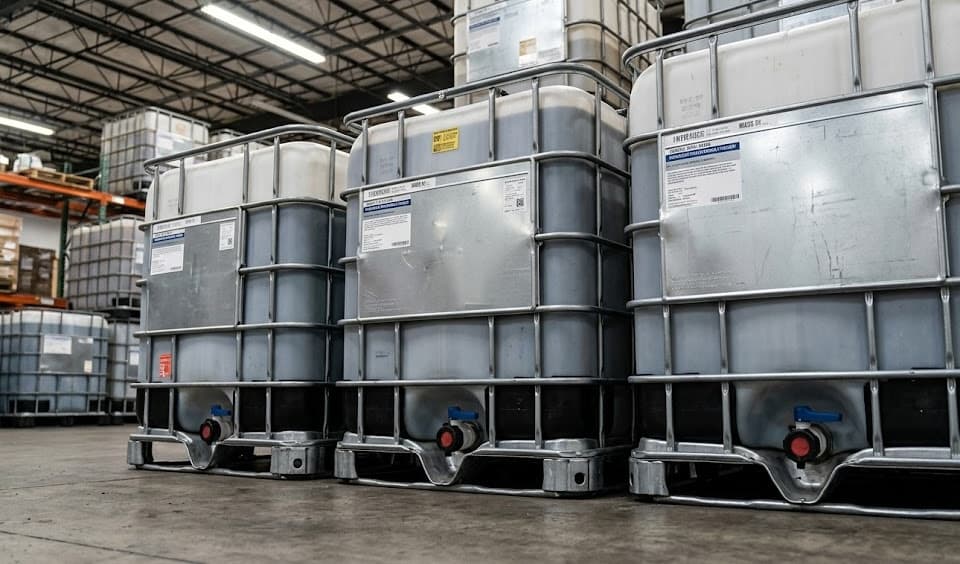
A thorough physical inspection is the single most important step when buying IBC totes. The valves, gaskets, and cage connections shown here are the critical checkpoints that separate a reliable container from a liability. Use the checklist above every time you evaluate a tote — whether in person or from photos.
Red Flags to Avoid
Walk away from any seller who exhibits these warning signs. A cheap tote is no bargain if it leaks, fails an inspection, or contaminates your product.
⚠No information about previous contents
A reputable seller should always know or disclose what was stored in the tote. Unknown contents pose contamination and safety risks.
⚠Missing or illegible data plate
The data plate identifies the manufacturer, UN rating, and max SG. Without it, you cannot verify the tote is certified for your application.
⚠Strong chemical odor inside the bottle
HDPE absorbs chemicals over time. If you can smell the previous product, the bottle is contaminated and may not be suitable for a different product.
⚠Cracks around the valve fitting
This is the highest-stress point on the bottle. Hairline cracks here will worsen under pressure and cause leaks.
⚠Heavily rusted cage welds
Surface rust is normal, but if weld points are deeply pitted or flaking, the cage may fail under the weight of a full tote.
⚠No return or complaint policy
Reputable dealers stand behind their products. If a seller refuses to accept returns for defects discovered within a reasonable period, look elsewhere.
⚠Price too good to be true
If a 275-gallon reconditioned tote is being sold for under $60, the reconditioning was likely cosmetic only. Ask specifically what was done.
⚠Seller cannot provide SDS for previous contents
For reconditioned totes, the Safety Data Sheet of the previous product is essential for verifying chemical compatibility with your intended use.
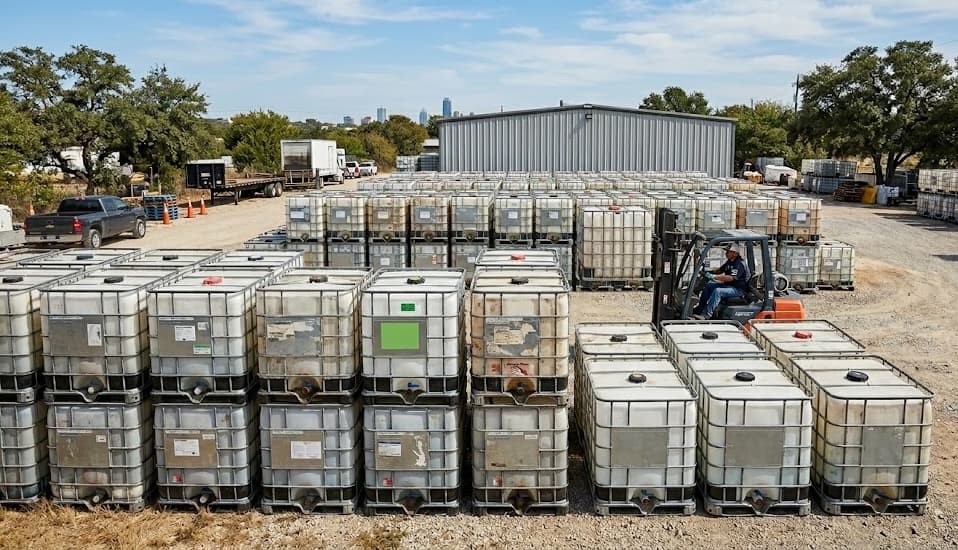
Smart purchasing starts with understanding the true cost
Compare new, reconditioned, and used IBC totes side by side
Cost Comparison
All prices are approximate ranges for 275-gallon HDPE composite totes in the Baltimore metro area. Actual prices vary by quantity, condition, and current supply.
| Condition | Price Range | Cost per Gallon Capacity | Warranty | Expected Life | Cost per Year |
|---|---|---|---|---|---|
| New | $250 - $450 | $0.91 - $1.64 | 5 years | 5-7 years | $36 - $90 |
| Reconditioned | $100 - $200 | $0.36 - $0.73 | 30-90 days | 3-5 years | $20 - $67 |
| Used (As-Is) | $50 - $120 | $0.18 - $0.44 | None | 1-3 years | $17 - $120 |
| Rebottled | $150 - $250 | $0.55 - $0.91 | 1-2 years | 5-7 years | $21 - $50 |
Volume discounts: Most suppliers (including Baltimore IBC Recycling) offer 10-25% discounts on orders of 10+ totes. If you need 50+, ask about pallet-load pricing and free delivery within the Baltimore metro area.
Buyer's Checklist
Print this list or save it to your phone. Check every item before completing a purchase.
Material Compatibility Guide
Not every liquid is compatible with every IBC material. Use this reference table to confirm your product will not degrade the bottle, corrode the fittings, or cause a safety hazard.
| Liquid / Chemical | HDPE | 304 Stainless | 316L Stainless | Notes |
|---|---|---|---|---|
| Water (potable) | Excellent | Excellent | Excellent | Food-grade HDPE required for drinking water |
| Soaps & Detergents | Excellent | Good | Excellent | Rinse thoroughly between products |
| Vegetable Oils | Good | Excellent | Excellent | HDPE may absorb odors over time |
| Ethanol / Isopropanol | Limited | Excellent | Excellent | HDPE may swell; stainless preferred |
| Sulfuric Acid (< 50%) | Excellent | Poor | Limited | HDPE is the standard choice for acids |
| Hydrochloric Acid | Excellent | Poor | Poor | Only HDPE; avoid all metals |
| Sodium Hydroxide (< 50%) | Good | Good | Good | Elevated temps may affect HDPE |
| Bleach (Sodium Hypochlorite) | Excellent | Poor | Limited | Chlorides corrode stainless steel |
| Diesel Fuel | Limited | Excellent | Excellent | Flammable; SS with grounding required |
| Gasoline / Solvents | Not Recommended | Excellent | Excellent | Static risk with HDPE; use SS only |
| Fertilizers (liquid) | Excellent | Good | Excellent | Check for ammonia concentration |
| Glycerin / Glycol | Excellent | Excellent | Excellent | Compatible with all materials |
| Latex / Acrylic Paints | Good | Good | Good | Difficult to fully clean from HDPE |
| Milk / Dairy Products | Good (food-grade) | Excellent | Excellent | 316L preferred for lactic acid |
| Wine / Juice | Limited | Good | Excellent | HDPE may impart taste; SS preferred |
Important:This table provides general guidance only. Always verify chemical compatibility with the specific SDS (Safety Data Sheet) for your product and consult the IBC manufacturer's compatibility chart before use. Concentration, temperature, and contact duration all affect compatibility ratings.
IBC Brand Comparison
The major IBC manufacturers each have distinct strengths. Here is how the leading brands compare in the U.S. market.
| Brand | Headquarters | Popular Models | Strengths | Considerations |
|---|---|---|---|---|
| Schutz | Germany | ECOBULK MX, SX, LX series | Market leader; excellent rebottling program (RECOBULK); widest parts availability; strong food-grade options | Premium pricing; proprietary valve fittings on some models |
| Mauser Packaging | Germany / USA | NCG, IBC SM series | Strong reconditioning network; lightweight cage design; good for high-volume industrial use | Cage may be thinner gauge than Schutz; some model-specific parts |
| Greif | USA | IBC 275, IBC 330 series | Strong U.S. distribution; durable cage construction; competitive pricing for bulk orders | Fewer rebottling options; smaller food-grade lineup |
| TPS (Time Technoplast) | India / Global | Swift-Tech IBC series | Cost-effective; good for emerging markets; UN-certified options available | Limited reconditioning infrastructure in U.S.; parts may be harder to source |
| Werit | Germany | IBC 1000K, 600K series | Premium build quality; excellent for chemical and pharma applications; heavy-duty cage | Higher price point; less common in U.S. secondary market |
Our Recommendation
For most Baltimore-area buyers, Schutz and Mauser totes offer the best combination of availability, parts support, and reconditioning options. Their models dominate the U.S. secondary market, which means replacement valves, gaskets, and bottles are always in stock. If you are buying reconditioned totes, these two brands will give you the most options and the easiest long-term maintenance.
Questions to Ask Your Supplier
Before committing to a purchase, ask your supplier these questions to ensure you are getting exactly what you need at a fair price.
1What was previously stored in these totes?
Essential for chemical compatibility and food-grade verification. A reputable seller should always know.
2Can you provide SDS documentation for the previous contents?
Critical for hazmat compliance and contamination risk assessment.
3What is the manufacture date on the bottles?
HDPE bottles have a 5-year DOT lifespan for UN-rated use. Older bottles may need to be rebottled.
4What does your reconditioning process include?
Ask specifically about cleaning method, gasket replacement, valve inspection, cage straightening, and testing.
5Do you offer rebottled totes?
Rebottled totes combine a new food-grade bottle with an existing cage, offering like-new performance at a lower price.
6What is your return or warranty policy?
Reputable sellers offer at least 30-90 day coverage on reconditioned totes for defects discovered after purchase.
7Do you offer volume discounts?
Most suppliers discount 10-25% for orders of 10+ totes. Always ask for tiered pricing.
8What delivery options are available?
Confirm delivery costs, lead times, and whether free delivery applies for your order size and location.
9Can I visit your facility and inspect totes before purchasing?
A reputable supplier will welcome facility visits. If they refuse, consider it a red flag.
10Do you buy back used totes?
A buyback program reduces your total cost of ownership and ensures responsible end-of-life handling.
11What valve type and gasket material comes standard?
Ensure the valve matches your dispensing setup and the gasket is compatible with your product.
12Can you provide a Certificate of Conformity or compliance documentation?
Required for food-grade, pharmaceutical, and UN/DOT regulated applications.
Budget Planning Guide
Use these price ranges and cost factors to build a realistic IBC procurement budget. All figures are for 275-gallon HDPE composite totes in the Mid-Atlantic market.
Small Operation (1-9 Totes)
Medium Operation (10-49 Totes)
Large Operation (50+ Totes)
Hidden Costs to Budget For
- $ Replacement valves and gaskets: $5 - $35 per tote per year
- $ Cleaning supplies (if DIY): $3 - $10 per cleaning cycle
- $ Pallet repairs: $5 - $15 per tote per year for wood pallets
- $ UV covers for outdoor storage: $20 - $50 each
- $ Disposal or recycling fee (end-of-life): $10 - $25 per tote
- + Buyback credit (offsets cost): $10 - $50 per tote returned
Buying Used IBCs: A Step-by-Step Inspection Guide
Use this 10-point inspection protocol every time you evaluate a used IBC for purchase. Each point can be completed in under 60 seconds for a total inspection time of about 10 minutes per tote.
Walk Around the Tote — Overall First Impression
Stand back 5 feet and look at the tote from all four sides. Check for obvious tilting, severe cage damage, pooled liquid underneath, or missing components. A tote that looks wrong from a distance often has serious issues up close.
Tote stands level, cage is square, no visible leaks or missing parts.
Tote leans noticeably, cage is visibly collapsed on one side, liquid pooling below.
Inspect the Bottle Top — Cap and Fill Opening
Remove the top cap and inspect the fill opening. Look inside with a flashlight if available. Check the cap threads for cross-threading or damage. Inspect the inner gasket on the cap.
Cap removes easily, threads are clean, gasket is pliable and intact, interior looks clean or consistently coated.
Cap is stuck or cross-threaded, gasket is cracked or missing, visible mold or heavy sediment inside.
Smell the Interior
Lean over the open fill port and take a gentle sniff. HDPE absorbs chemicals over time, and a strong odor indicates permanent contamination. Do not deeply inhale if the previous contents are unknown — use a wafting motion.
Mild or no odor. Faint plastic smell is normal.
Strong chemical, solvent, or rancid odor. This tote has absorbed its previous product.
Check Bottle Walls for Cracks and UV Damage
Run your hands along the bottle surface through the cage openings. Press firmly on the sidewalls. Look for yellowing, chalky texture, hairline cracks, or areas that feel thin or brittle compared to the rest of the bottle.
Smooth, consistent texture. White or translucent color. No brittle areas.
Yellowed, chalky, or brittle areas. Visible cracks. Thin spots that flex excessively under pressure.
Test the Bottom Valve
Open and close the bottom valve 3-4 times. It should operate smoothly without excessive force. With the valve closed, look for any drips around the valve body, outlet, and where it connects to the bottle. If water is available, add 5 gallons and check for leaks.
Valve operates smoothly, closes completely, no drips anywhere around the assembly.
Valve is stiff, does not close fully, drips from the body or connection point, handle is cracked or missing.
Inspect the Valve Gasket
If possible, remove the valve and inspect the gasket directly. Look for swelling (indicates chemical attack), hardening (indicates age), cracking, or deformation. Gaskets are inexpensive to replace but a failed gasket means a leaking tote.
Gasket is pliable, maintains its shape, no visible cracks or swelling.
Gasket is hard, cracked, swollen, or permanently deformed. Plan to replace it ($2-5).
Examine All Cage Welds
Walk around the tote and look at every visible weld point — especially the four bottom corners, the top frame connections, and the mid-height horizontal bars. Use a screwdriver or key to scrape suspicious rust spots and check if the metal underneath is solid.
Welds are intact, surface rust only (cosmetic), metal is solid underneath.
Broken welds, deep pitting that flakes when scraped, visible cracks in the steel at weld points.
Check the Cage Data Plate
Locate the metal data plate on the cage (usually on the top frame or upper corner). Read the manufacturer name, UN rating, specific gravity rating, date of manufacture, and volume. Verify this information matches what the seller has told you.
Data plate is present and legible. Information matches the seller's description.
Data plate is missing, illegible, or does not match the seller's claims. Major red flag.
Evaluate the Pallet
Look at the pallet from all four sides. Check for broken boards (wood) or cracks (plastic). Verify that forklift entry points are clear and not blocked by broken material. Push down on the corners to check for rocking or instability.
Pallet is solid, no broken boards, forklift entries are clear, pallet sits flat without rocking.
Broken boards, blocked forklift entries, pallet rocks on flat ground, visible rot or pest damage.
Review Labels and Previous Contents Documentation
Check all labels on the tote. Old labels should be removed or covered on reconditioned units. Ask the seller for documentation of previous contents (SDS). Verify the manufacture date has not exceeded 5 years if you need UN/DOT rating for transport.
Previous contents are known and documented, labels are clean, manufacture date is within acceptable range.
No information about previous contents, multiple conflicting labels, manufacture date exceeds 5 years for UN-rated use.
Understanding IBC Markings and Labels
Every IBC carries standardized markings that tell you exactly what it is rated for. Learning to read these markings empowers you to verify claims from any seller and ensures you purchase the right container for your application.
UN/DOT Marking Format
The UN marking on an IBC follows this standardized format. Here is an example and what each segment means:
31HA1/Y/0520/USA/MAUSER/10456Specific Gravity (SG) Rating
The SG rating on the data plate indicates the maximum density of liquid the tote can safely hold. Your product's SG must be equal to or less than the tote's rated SG.
| SG Rating | Suitable Products | Common Examples |
|---|---|---|
| 1.0 | Water-density liquids only | Water, light detergents, dilute solutions |
| 1.4 | Moderate-density liquids | Fertilizers, glycerin, thick soaps, syrups |
| 1.8 | Heavy-density liquids | Sulfuric acid, phosphoric acid, heavy chemicals |
| 2.0+ | Very heavy liquids | Concentrated acids, mercury-containing compounds |
Date Codes and Expiration
- Manufacture date: Molded into the HDPE bottle (usually on the bottom or near the top fill ring) and stamped on the cage data plate. Format is typically MM/YY or a clock-style date code.
- 5-year rule for UN-rated transport: HDPE IBC bottles are certified for UN/DOT regulated transport for 5 years from the date of manufacture. After 5 years, the bottle must be replaced (rebottled) to restore certification.
- Non-regulated use: If you are not transporting hazmat, the 5-year rule does not apply. HDPE bottles stored indoors and maintained properly can last 7-10 years for non-regulated storage applications.
- Reconditioning date: Reconditioned totes should display the reconditioning date, reconditioner's name, and a statement that the tote has been reconditioned. This does not reset the 5-year manufacture date for UN purposes.
IBC Lifespan & When to Replace
Understanding expected lifespans helps you budget accurately and avoid using containers past their safe service window.
Expected Lifespan by Use Case
Signs It Is Time to Replace
- ⚠Bottle has visible cracks, especially around the valve fitting or top fill ring — cannot be patched for liquid service
- ⚠HDPE is severely yellowed, chalky, or brittle to the touch — UV degradation has compromised structural integrity
- ⚠Persistent odor after two full cleaning cycles — chemical absorption is permanent and cross-contamination risk is high
- ⚠Cage welds are broken at multiple points — structural failure risk during handling and stacking
- ⚠Bottle has bulged or deformed permanently — indicates heat damage or chemical reaction that has weakened the HDPE
- ⚠Manufacture date exceeds 5 years and you need UN/DOT certification for transport — rebottling or replacement required
Tip: When a tote reaches end-of-life, do not pay to dispose of it. Sell it through our Buyback Program — we pay cash for totes in any condition and handle all recycling responsibly. Even a cracked, damaged tote has material value in steel and HDPE.
Cost Comparison: Buying New vs Used vs Leasing
A detailed analysis of the true total cost of ownership across three acquisition strategies. Figures are based on a 275-gallon HDPE composite tote over a 5-year period.
| Cost Factor | Buy New | Buy Reconditioned | Buy Used (As-Is) | Lease/Rental |
|---|---|---|---|---|
| Initial Purchase Price | $350 | $165 | $85 | $0 |
| Monthly Lease/Rental Fee | N/A | N/A | N/A | $25/month |
| 5-Year Lease Total | N/A | N/A | N/A | $1,500 |
| Maintenance (5 years) | $75 | $100 | $175 | Included |
| Gasket Replacements (5 years) | $15 | $25 | $40 | Included |
| Expected Replacement During Period | None | 1 rebottle ($120) | 1 full replacement ($85) | Lessor's responsibility |
| Buyback Value at End of Life | -$30 (credit) | -$20 (credit) | -$10 (credit) | N/A (return to lessor) |
| Total 5-Year Cost | $410 | $390 | $375 | $1,500 |
| Cost Per Year | $82/year | $78/year | $75/year | $300/year |
When Buying Makes Sense
Purchasing (new, reconditioned, or used) is almost always more cost-effective than leasing for long-term use. Over a 5-year period, buying saves $1,100-$1,125 compared to leasing. Additionally, you own the asset, can modify it as needed, and recover value through buyback at end of life.
When Leasing Might Make Sense
Leasing can be appropriate for very short-term projects (under 6 months), seasonal operations that only need containers part of the year, or situations where you cannot make the upfront capital expenditure. However, even for short-term use, buying used totes and selling them back is usually cheaper.
First-Time Buyer Checklist
If this is your first IBC purchase, work through this checklist before contacting any supplier. Having these answers ready will ensure you get accurate quotes and the right product.
Determine Your Requirements
Evaluate Your Budget
Prepare Your Facility
Contact Suppliers
Common Mistakes When Buying IBCs
We see these errors from buyers every week. Avoid them and you will save money, time, and frustration.
❌Mistake: Buying based on price alone without checking condition
Consequence: A $40 tote that leaks on first fill costs more than a $85 tote that works perfectly. Always inspect before buying or purchase from a supplier who guarantees condition.
How to avoid: Set a minimum quality standard before shopping. Grade B or better is the safest for most applications. Only buy Grade C if you personally inspect the tote or the supplier has a satisfaction guarantee.
❌Mistake: Ignoring chemical compatibility
Consequence: Storing an incompatible product in an IBC can cause bottle failure, product contamination, or dangerous chemical reactions. HDPE is not compatible with many solvents and concentrated oxidizers.
How to avoid: Always check the SDS for your product before selecting a container material. When in doubt, call the IBC manufacturer's compatibility hotline or ask your supplier for guidance.
❌Mistake: Not checking the manufacture date
Consequence: Buying a tote with a manufacture date older than 5 years means it cannot be used for UN/DOT regulated transport of hazardous materials. The certification has expired and cannot be renewed without rebottling.
How to avoid: Always verify the date stamp on the bottle. For non-regulated applications, older bottles can still be used, but budget for more frequent inspections and shorter remaining lifespan.
❌Mistake: Skipping the valve and gasket inspection
Consequence: A worn gasket or damaged valve causes slow leaks that can go unnoticed until product has been lost or a spill occurs. Valve leaks are the most common IBC failure point.
How to avoid: Test the valve at least 3-4 full open/close cycles. Add water and check for drips. Budget $5-30 for a replacement gasket or valve kit — cheap insurance against leaks.
❌Mistake: Overlooking pallet condition
Consequence: A broken pallet can cause a full tote (2,500+ lbs) to collapse during forklift transport, creating a serious safety hazard and potentially destroying the tote and its contents.
How to avoid: Inspect every board on a wood pallet. Replace any that are cracked or rotted. For long-term use, consider upgrading to a plastic pallet at the time of purchase.
❌Mistake: Buying too few and missing volume discounts
Consequence: Most suppliers offer 10-25% discounts starting at 10 units. Buying 8 totes now and 5 later costs significantly more than ordering 13 at once.
How to avoid: Plan your purchases in advance and consolidate orders to reach the next discount tier. If you anticipate future needs within 3-6 months, order them together to maximize savings.
❌Mistake: Not planning for end-of-life disposal
Consequence: Discarding IBCs improperly can result in environmental fines. Paying a waste hauler to dispose of old totes is expensive when buyback programs will actually pay you for them.
How to avoid: Before buying, confirm your supplier offers a buyback program. Factor the buyback credit into your total cost of ownership calculation — it can reduce your net per-unit cost by $10-50.
❌Mistake: Assuming all reconditioned totes are the same
Consequence: Reconditioning quality varies dramatically between suppliers. Some only rinse and relabel. Others perform full pressure-testing, gasket replacement, and cage straightening. You could receive a 'reconditioned' tote that is barely better than as-is.
How to avoid: Ask specifically what the reconditioning process includes: cleaning method, gasket replacement, valve inspection, pressure testing, and documentation. Visit the facility if possible. Reputable reconditioners welcome transparency.
Negotiation Tips for Bulk Purchases
Buying 10 or more totes? These strategies will help you negotiate the best possible deal with any supplier.
Get quotes from at least three suppliers
Competition is your best leverage. Even if you prefer one supplier, having competing quotes gives you concrete data to negotiate from. Share the competing price (without identifying the competitor) and ask if they can match or beat it.
Ask for the 'full truckload' price
Suppliers prefer to fill an entire truck on one delivery. A standard flatbed holds 36-48 IBCs. If your order is close to a full load, tell the supplier — they may offer a better per-unit rate to fill the truck rather than making a partial delivery.
Bundle services for combined discounts
If you are buying totes AND need delivery AND plan to sell back old ones, ask for a package price. Combining buy + deliver + buyback pickup into one trip saves the supplier time and fuel, and they should pass some of that savings to you.
Offer to sign a recurring contract
Suppliers value predictable, recurring business. Committing to a monthly or quarterly order — even a small one — gives you leverage to negotiate lower per-unit rates than one-time buyers receive.
Time your purchase strategically
IBC inventory fluctuates seasonally. Late fall and winter typically have the highest supply (many businesses clear out inventory before year-end). Spring and summer see higher demand. Buy when supply is high for the best pricing.
Negotiate on delivery, not just unit price
If the supplier will not budge on per-unit price, negotiate free delivery, free gasket replacements, or extended warranty coverage. These add-ons have real value and are often easier for the supplier to concede than a lower unit price.
Ask about payment terms
If you can pay upfront or within 7 days, ask for a cash discount (typically 2-3%). If you need Net 30 or Net 45 terms, understand that the supplier may build a small premium into the quoted price to cover the payment delay.
Inspect before committing — but commit quickly
Visit the facility, inspect sample totes, and verify quality. But once you are satisfied, place the order promptly. Good inventory moves fast, and the specific totes you inspected today may be sold to someone else by next week.
Ready to Buy with Confidence?
Baltimore IBC Recycling stocks new, reconditioned, and used IBC totes in all common sizes. Every reconditioned tote comes with documented previous contents and a satisfaction guarantee.